Case study
Software, ventures & commercial leadership
SKYLAB
I built SKYLAB into a profitable software business and a platform for ambitious digital ventures, then developed a 13-room Centre for Innovation around it, bringing teams, specialists, studios and early-stage businesses together.
Founder & Venture Director | 2015-2023
Years of involvement–
Back to selected work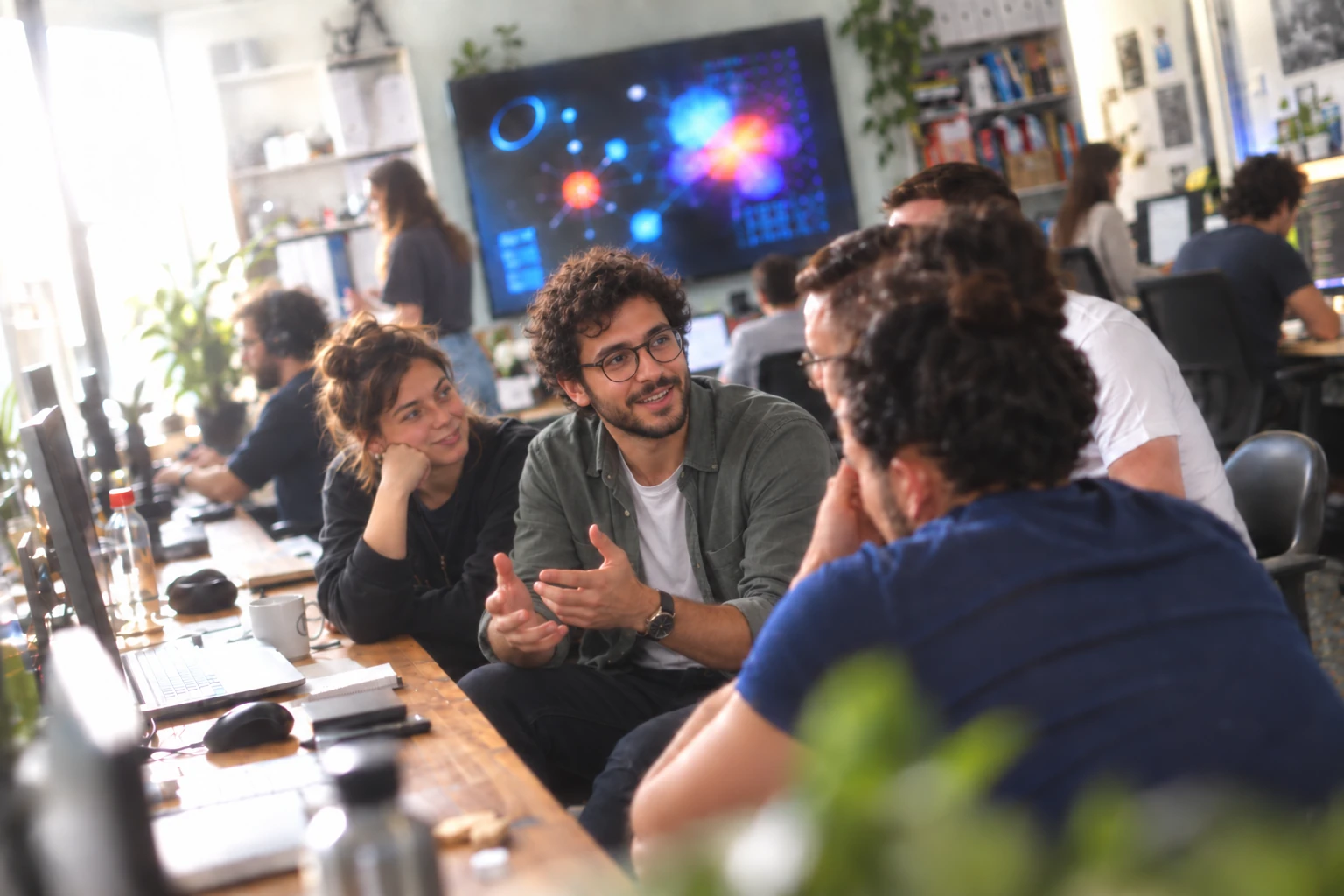
SKYLAB grew out of the success of Digital SHIFT, but I created it to pursue a different kind of opportunity.
Digital SHIFT had become a successful full-service agency with strong margins and an established client base. Rather than simply extracting those profits, I wanted to reinvest them into something more ambitious: an environment where technology specialists, creatives, founders and established businesses could work alongside one another, share expertise and turn new ideas into viable products and businesses.
I incorporated SKYLAB in April 2015, shortly after acquiring Imaginivity and expanding Digital SHIFT. What began with three desks inside another agency had already grown into taking over that agency, its clients and its office. I then negotiated for additional rooms, before eventually agreeing a five-year lease for the entire 13-room Grade II-listed building.
That became the SKYLAB Centre for Innovation.
Across Digital SHIFT and SKYLAB, we invested approximately £240,000 transforming a deteriorated building into a purpose-built creative and technology environment. I led the project personally, negotiating the lease, managing builders, electricians, carpenters, decorators and signage contractors, developing the SKYLAB brand and positioning, overseeing access and security, managing contracts and invoicing, and promoting the Centre through local business, technology and creative networks.
The refurbishment was substantial. Floors and sections of roof were replaced, mould and deterioration were dealt with, new kitchens and toilets were installed, and the interiors were rebuilt around the identity I had developed for SKYLAB. Reclaimed scaffold-board furniture sat alongside recessed LED walls, polished studio trussing, large displays and black stacked-stone surfaces. Professional video, photography and audio facilities were added alongside meeting rooms, offices and coworking areas. Even the restrictions of the listed building became part of the design problem, with lighting and large internal window graphics used to make the Centre visible from the street without compromising the exterior.
The result was not intended to be a conventional coworking space.
My aim was to engineer proximity between people who could help one another succeed. More than 30 staff, contractors, founders, coworkers and specialists operated through the building at its peak. Some rented desks or rooms, while shared studios, meeting facilities and communal areas created opportunities for people who might otherwise never have worked together to exchange knowledge, collaborate on projects and form commercial relationships.
There was a rooftop garden for informal events and barbecues, while a music venue on the ground floor meant we could meet clients downstairs, take them through the Centre and introduce them directly to the people and capabilities around us. Community talks, networking events and other activities helped extend that network beyond the businesses permanently based there.
The commercial model worked too. Desk and room rental helped support the physical infrastructure, while the Centre strengthened the businesses operating within it by providing facilities, talent and credibility that would have been expensive to reproduce individually. Approximately halfway through the planned five-year lease, the original £240,000 investment had effectively reached payback and the Centre had become profitable in its own right.
But the larger opportunity was what the environment allowed SKYLAB itself to become.
Where Digital SHIFT primarily served established clients through conventional agency relationships, SKYLAB focused increasingly on bespoke software, new intellectual property, product development, investment readiness and ventures where we could share in the commercial upside. I was particularly interested in arrangements where we could contribute expertise and development capacity in exchange for a closer alignment with the success of the product.
ClickASnap was moved into SKYLAB under a significant equity-for-development arrangement I negotiated with the client. Rather than functioning purely as a supplier billing for hours, our interests were now aligned with the growth of the platform. This gave us a reason to think beyond individual deliverables and consider product direction, commercial models, infrastructure, growth and long-term value.
Hollabox followed a similar philosophy from a much earlier stage. Its founders arrived with an idea and Photoshop concepts for a location-based discovery app. We brought them into the SKYLAB environment and helped turn those concepts into a working early product, including mobile and web interfaces, mapping and location functionality, notifications, social features and administration tools.
I worked directly with the founders, shaping the product and delivery roadmap, coordinating development and helping prepare the investment proposition. By late 2016, Hollabox had secured its first £100,000 of investment to fund the next version of the product. Version two launched in 2017 and the company subsequently attracted investment from Just Eat. Our role was helping move the founders from an idea and visual concepts to something credible enough to build, demonstrate and fund.
That combination of commercial thinking and specialist execution became central to how I ran SKYLAB.
I handled commercial strategy, pricing, proposals, tenders, client relationships, product direction, branding, UX and UI, auditing, testing, recruitment, technology research and roadmaps. I also supported founders with investor preparation, introductions, funding routes, grants and mentoring.
Where projects required expertise beyond my own, I brought in the right specialists. That included senior technical architects for complex AWS infrastructure, specialist developers and people specifically tasked with knowledge transfer when key technical staff left projects. My role was not to pretend to be the deepest technical expert in every discipline, but to understand the business and product problem well enough to assemble the right expertise, challenge assumptions and keep the work moving towards a commercially useful outcome.
When technical teams reached dead ends, I would often work through the problem with them step by step, getting the underlying constraints translated into terms I could interrogate and then helping explore alternative approaches. That ability to operate between commercial, creative and technical disciplines became one of the defining characteristics of how I worked.
The physical Centre ended earlier than planned in 2017 after control of the building passed to a new long-term commercial operator and we lost the premises. It was frustrating, particularly after the scale of investment and work that had gone into creating it, but it also demonstrated that the underlying business was stronger than the building.
I chose not to recreate the Centre elsewhere. After moving away from Bournemouth, I retained the clients, specialist relationships, product work and venture model we had developed and continued growing SKYLAB as a business without the property component.
The results ultimately became stronger still. SKYLAB's accounts were profitable by early 2019 and the business continued growing, reaching £713,000 turnover, £346,000 pre-tax profit and an 81% gross margin across its final 18-month reporting period.
When I later decided to relocate permanently to France, I chose to conclude SKYLAB through a planned Members' Voluntary Liquidation. It was a deliberate exit taken while the company was highly profitable, allowing me to realise the value built over the previous years and close that chapter at a natural transition point.
Looking back, the most important thing I created through SKYLAB was not a building, a coworking space or even a software company in isolation. It was an ecosystem designed to make ambitious work easier to start.
I used the profits and capabilities of an established agency to bring together infrastructure, talent, founders, clients and commercial expertise in one place, then built a business around turning those connections into products, investment opportunities and new ventures. The physical Centre lasted for only part of SKYLAB's life, but the operating model it created continued long after we left the building.