Case study
Product R&D & Applied AI
MRI Studio
From a personal medical scan to an interactive 3D imaging and research workstation.
Independent development · 2026
Years of involvement
Back to Unreal profile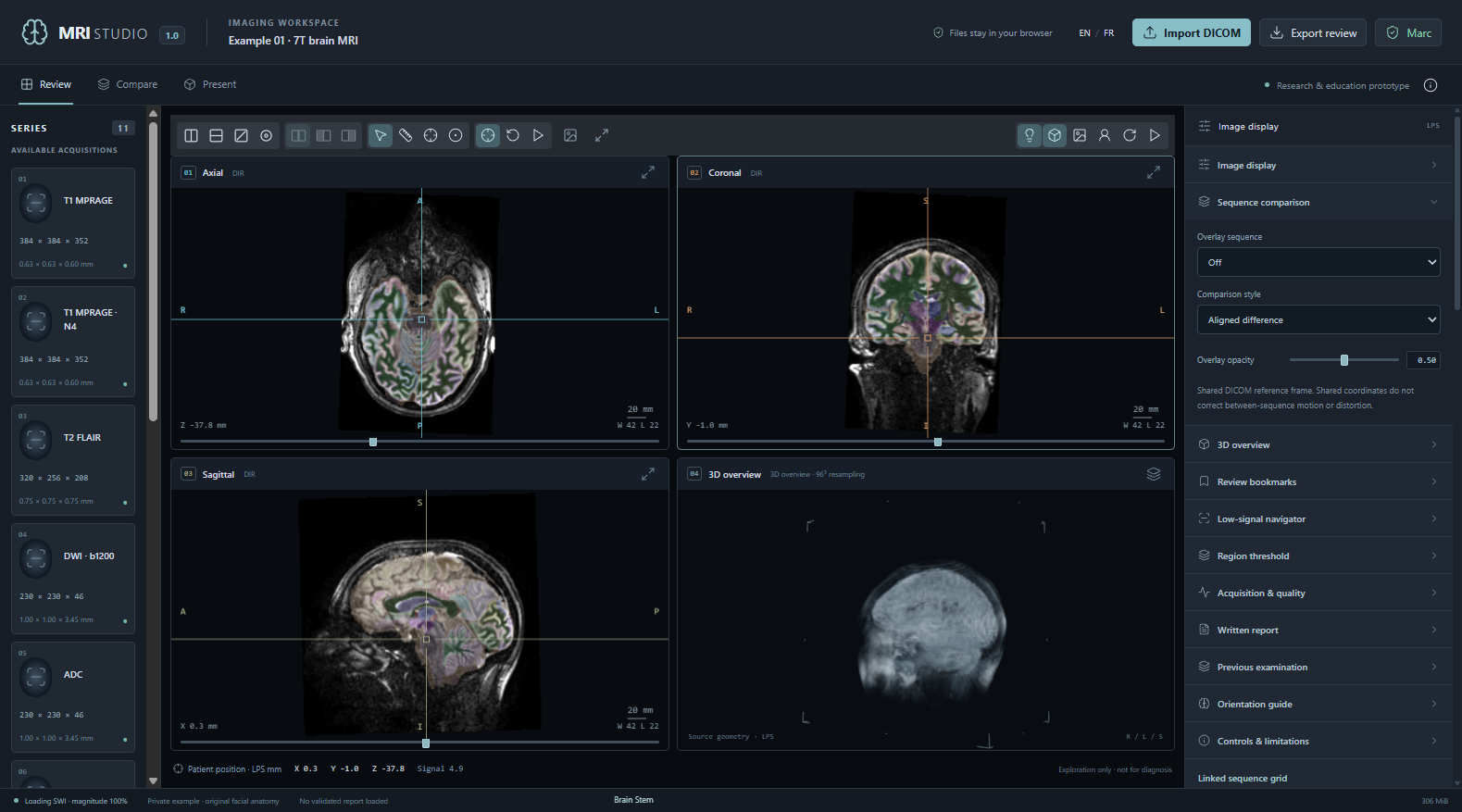
Following a cerebral MRI examination in October 2026, I received the original scan data several weeks before the expected radiologist's report. Rather than waiting to explore the images, I began developing my own browser-based MRI viewer.
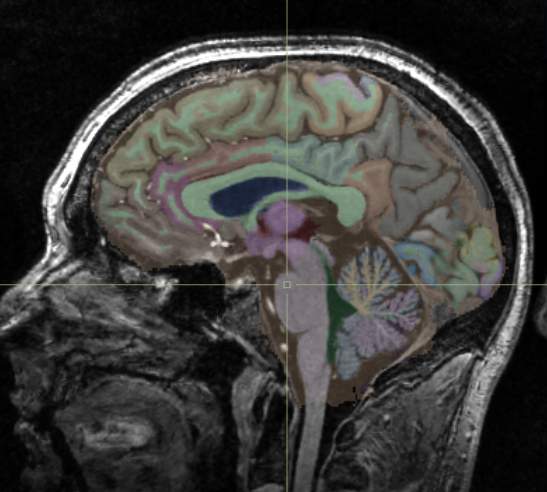
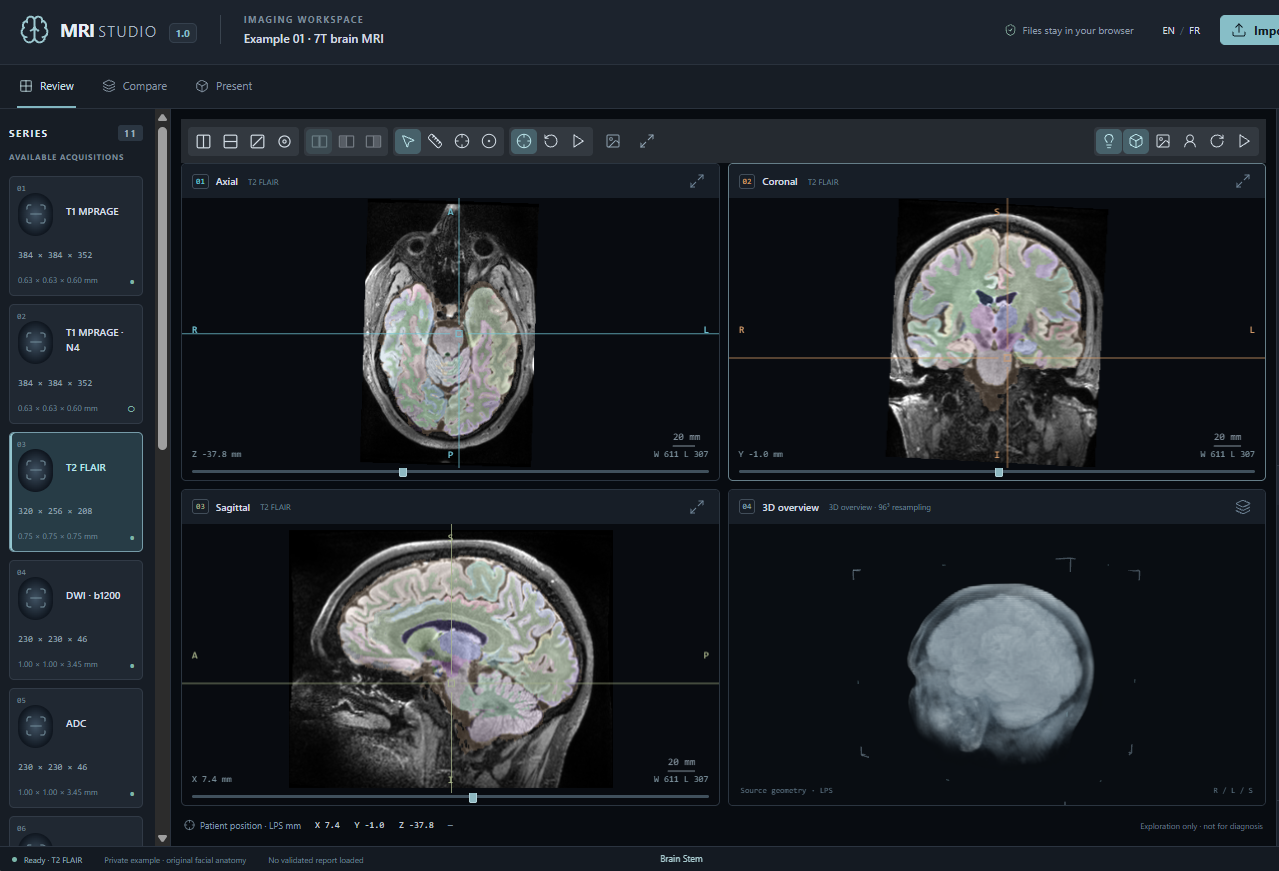
What started as a straightforward way to navigate medical images evolved into MRI Studio: a working multi-sequence imaging workstation combining interactive 3D visualisation, native-grid image review, anatomical mapping, quantitative tools and structured research workflows.
From raw imaging data to an interactive product
Drawing on my experience in real-time 3D, interactive systems and product design, I approached medical imaging as both a technical and usability challenge.
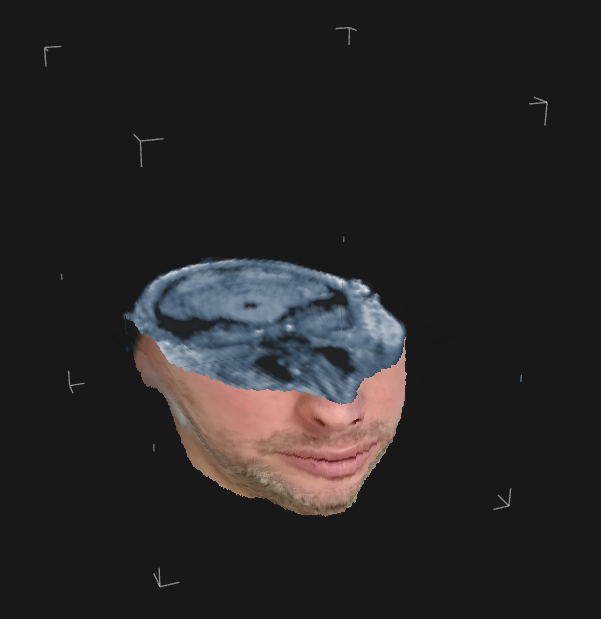
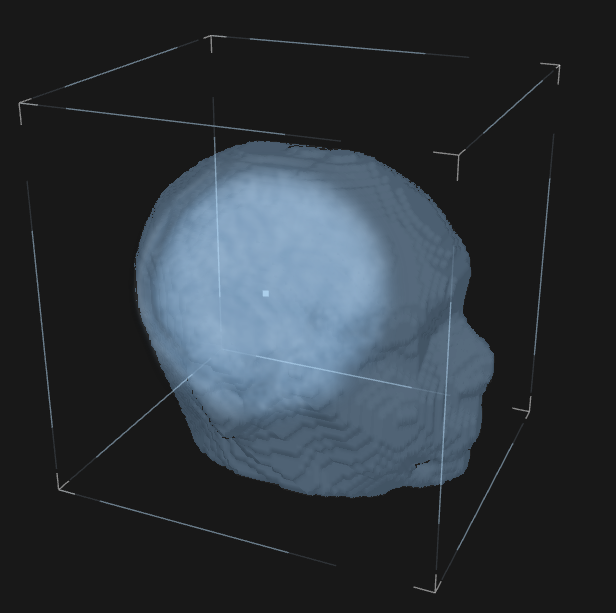
The application reconstructs spatial relationships from DICOM image data, connecting axial, coronal and sagittal views through shared patient coordinates. Users can explore multiple MRI sequences, compare image data, inspect anatomical structures, take measurements and move between detailed 2D slices and an interactive 3D overview.
The interface takes inspiration from the direct viewport interaction of Unreal Engine and the structured controls of Adobe Photoshop, adapting familiar creative-software principles to a specialist scientific workflow.
Version 1.0 incorporates pretrained AI-based anatomical segmentation, producing 99 observed anatomical labels in the demonstration study, alongside exploratory brain-symmetry analysis, atlas overlays, study registration tools and evidence-linked review notes.
Developed using JavaScript, Three.js, Python, ONNX Runtime and Cloudflare infrastructure, the application also supports local DICOM import, English and French interfaces, and protected access to private demonstration assets.
Exploring the next generation of medical review
The project raised a larger product question: could the same interface become a foundation for AI-assisted medical image review?
The opportunity lies in combining imaging data with appropriately licensed and validated AI models, longitudinal medical records and clinical reporting. Rather than replacing specialists, such a system could help organise evidence, identify candidates for closer inspection and present relevant information directly alongside the original medical images.
MRI Studio remains an independent research prototype, not a clinically validated diagnostic system. Its current value is demonstrating how spatial computing, scientific data processing, product design and applied AI can be brought together in a coherent, functioning application.
For me, it also demonstrates a principle that has shaped much of my professional work: the most interesting product opportunities often emerge from understanding a problem first-hand, then building something tangible to explore the solution.
Inside the application
Explore the prototype